
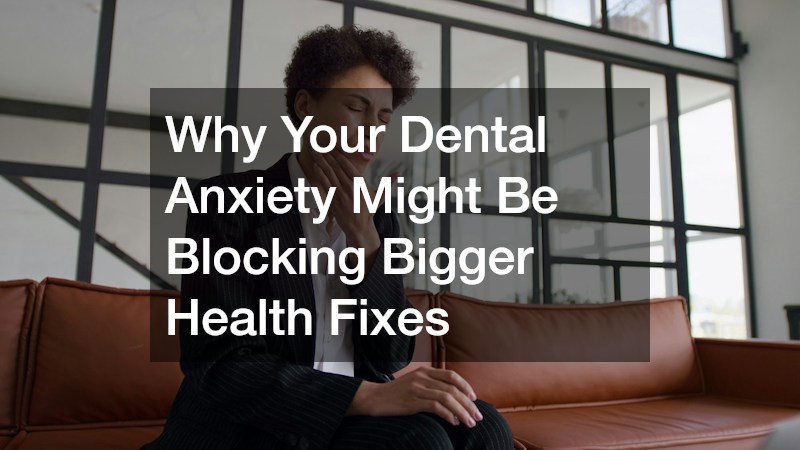
A racing heart at the mere thought of a dental checkup is more common than you might think, and for millions of people it means skipped appointments year after year. What starts as simple avoidance can quietly snowball into gum disease, tooth loss, and even complications tied to heart health and diabetes. Understanding where dental anxiety comes from, and what modern dentistry has done to address it, is the first step toward breaking the cycle. This article walks through the real risks of avoidance and the practical options available to make dental visits manageable again.
How Avoiding the Dentist Chair Affects Your Whole Body
Dental anxiety rarely stays contained to the mouth. Untreated gum disease has been linked to increased inflammation throughout the body, which research connects to higher risks of heart disease, stroke, and complications with blood sugar control. Studies estimate that people with periodontal disease face a significantly elevated risk of cardiovascular events, largely because oral bacteria can enter the bloodstream and contribute to arterial plaque buildup. For people managing diabetes, the relationship runs both directions: gum infections make blood sugar harder to control, and poorly controlled blood sugar makes gum disease more likely to worsen. This creates a frustrating loop where avoiding the dentist to sidestep one source of stress ends up complicating an entirely separate health condition. When people skip cleanings and checkups out of fear, small problems like a minor cavity have time to turn into infections that affect nutrition, sleep, and even mental health. Chronic tooth pain can make chewing difficult, pushing people toward softer, less nutritious foods and gradually affecting overall diet quality. Sleep suffers too, since dental infections and abscesses often cause throbbing pain that intensifies at night, leading to chronic fatigue that compounds stress and anxiety in a cycle that becomes harder to break the longer it continues.
The longer someone avoids care, the more invasive the eventual treatment tends to be. A cavity caught early might need a simple filling, but the same cavity ignored for years can progress into a root canal or extraction. What starts as a $150 fix can turn into a $1,500 procedure, plus the added cost of crowns, implants, or bridges to repair the damage left behind. But the fallout isn’t just financial. Untreated dental infections don’t stay contained to the mouth — bacteria from gum disease and decaying teeth can enter the bloodstream, contributing to inflammation linked to heart disease, stroke, and poorly controlled diabetes. Chronic oral infections have even been associated with respiratory issues, since bacteria can be inhaled into the lungs, and with complications during pregnancy, including preterm birth. This creates a frustrating loop where fear leads to avoidance, avoidance leads to bigger problems, and bigger problems create even more fear. Each skipped checkup makes the next one feel more daunting, since patients often assume the worst about what the dentist will find. Meanwhile, the physical toll compounds quietly in the background, showing up not as a single crisis but as a slow accumulation of preventable damage across the whole body.
Recognizing the Roots of Dental Fear
Dental anxiety often traces back to a specific bad experience, sometimes from childhood, involving pain, embarrassment, or feeling out of control in the chair. A rushed extraction, a dismissive comment about crying, or a procedure that hurt more than expected can leave an imprint that lasts decades, even after someone has had plenty of uneventful appointments since. The brain tends to store that one vivid memory as the template for what “the dentist” means, regardless of how many calm visits followed. For others, it is less about a single memory and more about the sounds, smells, and sensations that are unique to dental offices. The whir of the drill, the antiseptic smell, the feeling of tools scraping against teeth, or simply lying back in a reclined position with someone working close to your face can trigger a stress response on their own. These sensory cues bypass conscious reasoning, which is why logical reassurance (“it will only take ten minutes”) often does little to calm the reaction. Some people also carry general anxiety, PTSD, or sensory processing differences that make any medical or clinical setting feel overwhelming, not just the dentist’s office. For them, dental visits are one more instance of a broader pattern involving loss of control, unpredictable touch, or confined spaces. Understanding which category a person falls into, single-incident trauma, sensory triggers, or generalized anxiety, matters because each responds to different coping strategies, from desensitization techniques to sedation options to simple changes in communication with the provider.
It helps to name the specific trigger rather than lumping everything together as simply hating the dentist. Is it the sound of the drill, the numbing needle, the feeling of not being able to talk, or the fear of bad news about a cavity? Some people trace their fear back to a specific bad experience, like a botched extraction or a dismissive dentist who ignored signs of pain, while others struggle with more general issues like claustrophobia, a sensitive gag reflex, or a loss of control that comes from lying back in a chair with someone working inside their mouth. It’s worth digging even deeper into the sensory details. Is it the vibration of the drill against your teeth, the specific pitch of the sound, or the smell of the office that brings back old memories? Even the anticipation itself, like sitting in the waiting room or getting the appointment reminder text, can be its own separate trigger worth naming. Once the trigger is identified, it becomes much easier to communicate it to a dental team and find a workaround that actually addresses the problem. A patient who fears the needle might benefit from topical numbing gel applied first, while someone who fears losing control might do better agreeing on a hand-raise signal to pause the procedure at any moment. Naming the fear turns a vague sense of dread into a concrete, solvable problem instead of an obstacle you have to white-knuckle through every single time.
What Sedation Options Actually Involve

One of the biggest shifts in modern dentistry is the range of comfort options now available for anxious patients. Sedation dentists offer everything from mild oral sedatives that take the edge off to deeper options like IV sedation for patients who need a more complete sense of calm during longer procedures. This is not about knocking someone out unnecessarily; it is about matching the level of sedation to the level of anxiety and the complexity of the treatment.
Nitrous oxide, often called laughing gas, is one of the gentlest options and wears off within minutes of the mask being removed, which means patients can typically drive themselves home afterward. Oral conscious sedation involves taking a prescribed pill before the appointment and usually requires someone else to provide a ride. Whatever the method, a good provider will walk through the options in plain language so patients know exactly what to expect before agreeing to anything.
Questions to Ask Before Your First Appointment
Walking into a new dental office does not have to mean sitting down blind. A short phone call or email exchange beforehand can clear up a lot of uncertainty and help set expectations for the visit itself. Most practices are used to fielding these questions and will not think less of a patient for asking them.
- Ask whether the office has experience treating patients with moderate to severe dental anxiety
- Ask what sedation or comfort options are available and what each one involves
- Ask if you can bring headphones, a stress ball, or a support person into the treatment room
- Ask how the team handles communication during a procedure, such as raising a hand to pause
- Ask for a walkthrough of the first visit so there are no surprises
Why Cosmetic Concerns Often Fuel Avoidance
Fear of judgment is a surprisingly common thread in dental anxiety, especially for adults who feel embarrassed about the state of their teeth after years of avoidance. This is where a cosmetic dentist can play a role that goes beyond appearances. Addressing visible issues like discoloration, chips, or gaps can restore confidence and make people more willing to keep up with regular visits going forward.
It is worth remembering that cosmetic work and preventive care are not separate tracks; they often overlap. A patient who finally addresses a front tooth they have been self-conscious about for years may find it easier to walk through the door for a routine cleaning afterward, simply because the visit no longer feels tied to shame.
Building Comfort Early Through Childhood Dental Visits
A lot of adult dental anxiety actually starts in childhood, which makes early experiences worth paying close attention to for parents. Kids braces and other orthodontic treatments are often a child’s first extended relationship with a dental office, and how that experience feels can shape their attitude toward dental care for decades. A calm, patient-centered approach during these formative years can prevent the fear cycle from ever taking hold.
Parents can help by choosing providers who explain procedures in age-appropriate language and allow children to ask questions before any tool touches their mouth. Praising bravery rather than punishing tears, and avoiding phrases like “this won’t hurt” that can backfire if it does hurt even slightly, both matter more than people realize. Small choices made during childhood visits often determine whether someone grows into an adult who keeps appointments or one who avoids them for a decade.
Finding a Provider Who Matches Your Comfort Needs

Not all dental practices approach anxious patients the same way, so it is worth being selective rather than settling for the first name on an insurance list. Practices that regularly treat nervous patients tend to build in extra time for appointments, explain each step before doing it, and check in frequently rather than working in silence. Many dentists even offer a brief consultation before any actual treatment begins, giving patients a low-pressure chance to gauge the office’s pace and communication style. That kind of pacing alone can make a significant difference for someone who feels on edge in the chair.
- Look for online reviews that specifically mention how the office handled anxious or nervous patients
- Ask if the practice offers a consultation visit with no treatment involved, just to meet the team
- Confirm whether the office has calming amenities like weighted blankets, noise-canceling headphones, or dimmed lighting
- Check whether appointment times can be scheduled for lower-traffic hours to reduce waiting room stress
Dental anxiety is a real and manageable obstacle, not a personal failing, and it should never be the reason bigger health problems are allowed to develop unchecked. The tools to make dental care approachable already exist, from sedation options to providers who specialize in gentle, communicative care. The next step is simply reaching out to a practice, asking the right questions, and taking that first appointment one small step at a time.