
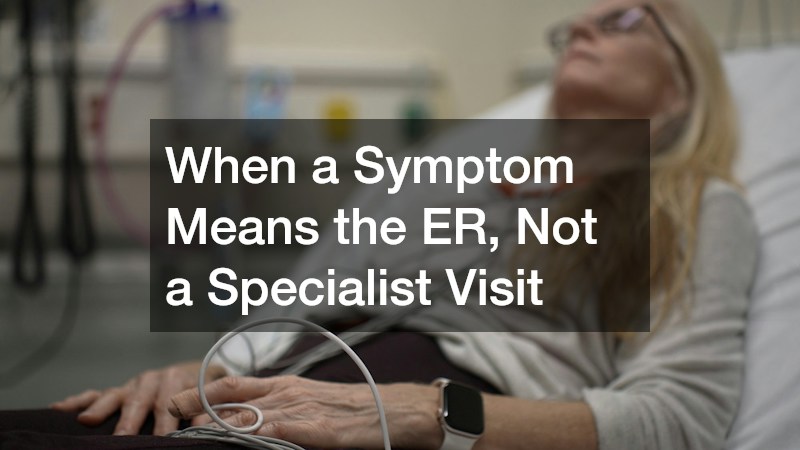
A sudden chest pain, a severe allergic reaction, or a limb that suddenly won’t move can feel terrifying and confusing at the same time. In the moment, many people waste precious minutes trying to decide whether to call their doctor, book a specialist, or head straight to urgent care. Knowing the difference between a true emergency and a condition that can wait for a scheduled appointment can protect your health and even save your life. This guide breaks down the warning signs that belong in an emergency room versus the symptoms better suited for a specialist’s office.
Chest Pain and Breathing Trouble That Appear Suddenly
Chest pain that comes on suddenly, especially when paired with shortness of breath, sweating, or pain radiating into the arm or jaw, should never be evaluated at a later date. These symptoms can signal a heart attack, pulmonary embolism, or severe lung problem, and every minute without treatment increases risk. Calling 911 or getting to the ER immediately gives you access to the diagnostic tools and medications needed to stabilize a heart or lung emergency. Waiting to see a cardiologist for an appointment days later is simply not a safe option when symptoms strike acutely.
It is worth noting that not all chest discomfort is cardiac in nature, but distinguishing between a pulled muscle and a cardiac event is not something to self-diagnose. Emergency physicians have access to EKGs, blood tests, and imaging that can rule out or confirm a life-threatening cause within minutes. If there is any doubt, the safer choice is always urgent, in-person evaluation rather than waiting it out at home.
Sudden Weakness, Confusion, or Slurred Speech

Stroke symptoms often appear without warning and can worsen rapidly, which is why they demand immediate emergency attention. Signs like facial drooping, arm weakness, and slurred speech are the classic indicators taught in public health campaigns for good reason. Acting within the first few hours of symptom onset can dramatically change the outcome, since certain stroke treatments only work within a narrow window of time.
- Sudden numbness or weakness on one side of the body
- Trouble speaking or understanding speech
- Sudden vision loss or double vision
- Severe, unexplained headache described as “the worst of my life”
- Loss of balance or coordination without clear cause
Severe Allergic Reactions and Breathing Emergencies
An allergic reaction that causes swelling of the lips, tongue, or throat, or that makes breathing difficult, is a medical emergency that requires immediate treatment. Anaphylaxis can progress within minutes, and epinephrine along with close monitoring is often necessary to keep the airway open. Even if symptoms seem to improve after using an epinephrine auto-injector, a trip to the emergency department is still recommended because reactions can return in waves. Specialists like allergists are valuable for long-term management and testing, but they are not equipped to handle an airway closing in real time.
Symptoms Better Suited for a Specialist Appointment
Not every unusual symptom requires rushing out the door. Chronic joint pain, mild skin rashes, digestive discomfort that comes and goes, or slowly progressing vision changes are typically better handled by a specialist who can take a detailed history and order targeted testing. These appointments allow for a more thorough, unhurried evaluation than an emergency setting can offer, and they often lead to better long-term treatment plans.
This category also includes symptoms related to hormonal or metabolic changes, such as unexplained weight gain or fluctuating blood sugar levels. A patient noticing these patterns might benefit from a conversation with an endocrinologist or primary care provider about options like a glp 1 prescription, which is typically managed through ongoing outpatient care rather than emergency treatment. These kinds of issues develop over weeks or months, giving patients time to seek the right specialist rather than the nearest hospital.
- Gradual joint stiffness or swelling
- Mild to moderate skin irritation or rash without breathing changes
- Recurring digestive issues without severe pain or bleeding
- Slow, progressive changes in weight or energy levels
- Routine follow-up for chronic conditions
Men’s Health Concerns That Belong in a Specialist’s Office
Certain men’s health symptoms are uncomfortable to discuss but rarely require emergency treatment unless there is severe pain, significant bleeding, or a sudden injury. Issues like low libido, mild erectile difficulties, or interest in elective treatments are best discussed with a urologist or men’s health clinic that can offer a private, judgment-free consultation. For example, some men explore treatments such as a priapus shot to address performance concerns, and this is a procedure best scheduled and discussed in a specialist setting rather than pursued during a medical crisis. These visits allow time for questions, realistic expectations, and a tailored treatment plan.
One clear exception is priapism, a prolonged and painful erection lasting more than four hours, which is a genuine medical emergency requiring immediate care. This condition can cause permanent damage if not treated quickly, so it should never be confused with elective or cosmetic procedures that are planned in advance. Knowing this distinction helps men understand when a symptom is urgent versus when it is simply worth bringing up at a scheduled visit.
Severe Abdominal Pain and Unexplained Bleeding
Abdominal pain that is sudden, intense, and unrelenting, particularly when paired with fever, vomiting, or an inability to stay still, often points to conditions like appendicitis, gallbladder disease, or a bowel obstruction. These situations can escalate quickly and may require surgery, so prompt evaluation matters far more than trying to wait out the pain. Similarly, unexplained bleeding, whether from the gastrointestinal tract, during pregnancy, or from an injury that will not stop, needs immediate medical attention.
- Abdominal pain lasting more than a few hours and worsening
- Pain accompanied by high fever or persistent vomiting
- Blood in stool, vomit, or urine
- Heavy bleeding during pregnancy
- Deep cuts or wounds that will not stop bleeding with pressure
Recognizing the difference between an emergency and a condition that can wait allows you to respond quickly when it matters most and avoid unnecessary stress when it does not. When symptoms are sudden, severe, or rapidly worsening, trust that instinct and seek immediate care without hesitation. For everything else, scheduling time with the right specialist often leads to more thoughtful, personalized treatment. When in doubt, a quick call to a nurse line or your primary care provider can help you decide which path is right for your specific situation.